

Professor Sir Stanley Wells (1930-2026)
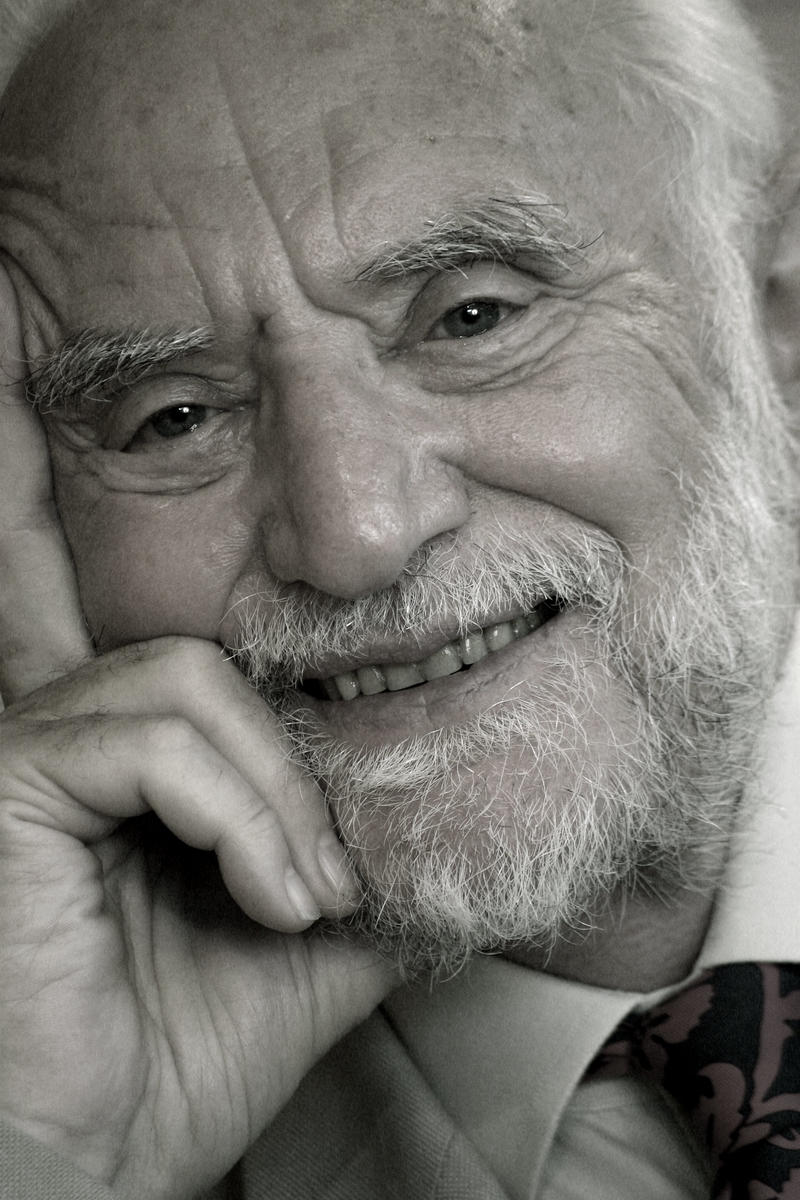
Stanley Wells, who has died aged 96, was a giant of the Shakespeare world. He is perhaps best known as an editor – of Shakespeare’s works (individually and as general editor), of Thomas Nashe, of the journal Shakespeare Survey, and of the series Oxford Shakespeare Topics. Under his editorship, the 1986 Oxford University Press Complete Works showed a pioneering commitment to Shakespeare as man of the theatre, valuing the so-called ‘bad quartos’ for what they could tell us about staging. Throughout, Stanley wanted the reader to have the same experience as the viewer: he pointed out that the edition provided more editorial directions for characters to kneel than had any previous edition, even if, he added self-deprecatingly, it didn’t always get them up again.
A related innovation was the edition’s commitment to Shakespeare the reviser. Stanley first announced this principle in the opening lecture at the International Shakespeare Conference in Stratford in 1981, addressing a packed hall. It was an era-changing moment in Shakespeare studies. Shockwaves followed but general editors everywhere had to commission new editions.
Stanley himself was a man of the theatre, a trustee of Shakespeare’s Globe, the Rose Theatre, Vice-Chairman of the board of trustees of the Royal Shakespeare Company, and a close friend of many of the most celebrated names on the classical stage: Judi Dench, Janet Suzman, Harriet Walter. His theatrical instincts underpinned some of his most important critical essays. He argued that The Two Gentleman of Verona must be Shakespeare’s earliest play because the dramatist had not yet learned how to move characters around the stage: they simply enter, talk, then exit. A penetrating piece on Shakespeare’s source-less plays – Midsummer Night’s Dream, Loves Labour’s Lost, and The Tempest – pointed out that they all feature a play-within-the-play and a meta-theatrical interest in theatre: indications of Shakespeare’s interest, nay obsession, with the tools of his theatrical profession. A brilliant piece of forensic work explored the tradition that Macbeth is jinxed in the theatre because of the death of a boy actor, Hal Berridge, in its first run. Stanley exposed this tradition as a myth, tracing it to a hoax perpetrated by Max Beerbohm in a theatre review in 1898. The hoax lay undetected until Stanley’s Shakespeare Survey article in 2001.
Stanley’s appetite for theatre was lifelong. The week before he died, he was asking about reviews of Harriet Walter in Julius Caesar. When asked, as he frequently was, to name his favourite Shakespeare play, Stanley would deftly redirect the question: ‘If you mean “What play would I like to see in the theatre tonight?”, the answer is Midsummer Night’s Dream’. He enjoyed reading aloud and being read aloud to (Dickens especially). When a typescript of the adaptation of The Woman in Black landed on the desk of his then wife, Susan Hill, Stanley read it with excited approval. The rest is (West End) history.
After a period ‘as a schoolmaster in the country’ (‘like Shakespeare’, he reminded us, with a twinkle), Stanley gained a PhD at the Shakespeare Institute (part of the University of Birmingham) and in 1962 became a fellow, teaching its postgraduate and visiting undergraduate students. A stint in Oxford (1978-88) was followed by a return to the Institute as its director. By then, it was housed in Edgbaston. Stanley’s great triumph was to return it to its Stratford home, augmented by a splendid new library for which he successfully fundraised. As director he taught, edited, researched and presented at conferences, incidentally without ever claiming any of the sabbatical leave to which he was entitled.
Between his two Institute stints, he led the newly created Shakespeare department at Oxford University Press. The Press wished to avoid the problems of R.B McKerrow and Alice Walker, both of whom did not complete their task of editing the complete works, and decided to create a full-time Shakespeare editorial department. Stanley appointed Gary Taylor, John Jowett, and William Montgomery to assist. Throughout his career, Stanley was generous and enabling to younger scholars, a mentor before such relationships had a vocabulary or a presence. Latterly, the partnership with the Stratford-based Paul Edmondson at the Shakespeare Birthplace Trust produced an astonishing number of joint lectures, taught courses (at Cumberland Lodge, abroad, and at the Shakespeare Birthplace Trust) and publications, particularly on the sonnets.
Stanley chaired the board of the Shakespeare Birthplace Trust and was its honorary president. While at Oxford, he was a senior research fellow at Balliol and was elected honorary fellow in 2014. He remained deeply attached to Oxford and felt keenly the honour when the Press named the biennial Wells Lectures after him. He always enjoyed attending.
Although known as a Shakespearean, Stanley began his academic career with an edition of Robert Greene’s Pandosto and a collection of Nashe’s prose. His interest in Shakespeare’s contemporaries led to Shakespeare and Company (Penguin, 2006). In his later years he published on Shakespeare and sexuality whether in Shakespeare, Sex, and Love (Oxford University Press, 2010) or in his collaborative work on the sonnets.
Impish, witty, ebullient, and genial, Stanley was a gifted communicator, as at home writing general introductions and guides to Shakespeare as he was writing textual or biographical material. During Covid he delivered a series of online lectures, published as What was Shakespeare Really Like? (CUP, 2023). By then, Stanley was 93. His appetites – intellectual, cultural, social, gastronomic –were undiminished, and his fondness for a pre-prandial prosecco, lamb shank, and sticky toffee pudding fuelled many Stratford evenings of animated conversation. Always a great traveller, he revisited Venice just two months before he died, attending concerts and galleries.
—Professor Laurie Maguire

