
A Tribute to Deborah Cameron (1958-2026), Rupert Murdoch Professor of Language and Communication, 2004-2023
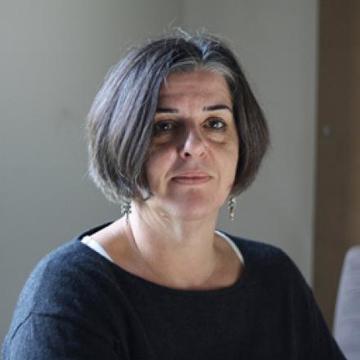
Professor Deborah Cameron held the Rupert Murdoch Professorship in Language and Communication at the University of Oxford for nearly two decades, from 2004-2023. The Faculty of English, the Faculty of Linguistics, Philology and Phonetics, Worcester College, her academic community and her many friends mourn her death, at the age of 67.
Cameron’s work was foundational for the fields of sociolinguistics, gender studies, feminist theory, discourse studies, and linguistic anthropology. Many considered her the world’s foremost scholar of language and gender. But her ground-breaking critical treatment of language in the public sphere — in terms of method, theory, and evidence — sharpened the field as a whole and made her one of the most widely cited linguists in the world.
She grew up in Glasgow and Yorkshire and was the first in her family to attend university (her manager at a high street bank suggested university when her contract ended). She told the story of her initial encounters with Oxford with amusement and some pride, here recounted by Julie Bindel in the Guardian: “In 2004, when she was appointed the Rupert Murdoch Professor of Language and Communication at Oxford University, there was a delicious irony: one member of the appointment board had, in 1983, been on a panel that rejected the thesis proposal she had submitted to the research board of the English faculty. Disagreeing with the board’s decision, Cameron left Oxford without a PhD. Disadvantaged by this, but undeterred, she had her book Feminism and Linguistic Theory (the subject of her proposed thesis) published in 1985.” That work and many others went on to become classic references, and it is fitting that she returned and mentored so many at Oxford. She was an energetic presence at University events, including the annual English Grammar Day at the British Library, TORCH Oxford Research Centre in the Humanities, the Oxford Literary Festival, and many more. She trained and nurtured generations of students at Oxford and elsewhere, many of whom note her formative influence.
Cameron published nearly 20 books, many with thousands of citations and used globally. Her characteristic method was to use sound evidence to interrogate the deeper ideological work done by language, and to avoid simple generalisations. Whether looking at gender, sexuality, politics, or workplaces, she resisted the idea of inherent or essentialised categories and sought to trace the underlying influence of role, context, affiliation, and power. She drew on theoretical insights from across linguistics and anthropology and had a refreshing and fearless ability to critically reevaluate her own disciplines.
This practice generated the fundamental shifts in theory that every discipline needs. It was true of her contributions to feminist theory (Feminism and Linguistic Theory 1985, The Lust to Kill 1987, The Feminist Critique of Language: A Reader 1990, The Trouble and Strife Reader 2007, Language, Sexism, and Misogyny 2023), to gender and sexuality (Language and Sexuality 2003, On Language and Sexual Politics 2006, The Myth of Mars and Venus 2007, Gender, Power, and Political Speech: Women and language in the 2015 UK General Election 2016), to the study of language control (Verbal Hygiene 1995, Good to Talk 2000, The Rise of Dogwhistle Politics 2025), and in textbooks on research methods and ethics (Researching language: issues of power and method 1992; Analysing Conversation; Working with Spoken Discourse 2001; Working with written discourse 2014).
She sharply opposed the notion of a stable, transhistorical ‘women’s language’, noting that linguistic and activist use of such categories risked reproducing the very stereotypes they aimed to dismantle. The Myth of Mars and Venus, written for lay readers to counter prevailing tropes from books such as Men are from Mars, Women are from Venus, was remarkably successful. To put it simply, in her words, it turns out that “men are from earth and women are from earth.” The same thread runs through her work on language and power. From Verbal Hygiene (1995) and Good to Talk (2000) to her final works, she critiqued the idea—again held by many activists, linguists, and others—that a change in language could directly translate into social justice or authentic transformation. The Rise of Dogwhistle Politics (2025), published just months before she died, is a testament to the continuing critical relevance of her theory of verbal hygiene, to account for tactics on both the right and the left under present-day political polarisation.
Feminist activism was also always part of Cameron’s life; some related writings are gathered in The Trouble and Strife Reader. She sometimes noted with dismay that her original feminist work was still relevant decades later. Her early commentary on gender bias in crime and violence reporting (The Lust to Kill 1987) still applies to the powerfully normalising formulas of media language (Language, Sexism, and Misogyny 2023, and the subject of her last English Grammar Day talk in 2025).
For Cameron, her feminism and research were part of the same hermeneutic work. When asked how the political nature of her research affected her perception of herself as a scientist, she replied: “That’s a difficult question for me to answer. It reminds me of something Zaha Hadid said when she was asked what it was like to be a woman architect. She said, ‘I don’t know, I’ve never been a man’. Similarly, I have never been a non-political researcher. It’s not just the gender stuff: my work on research methods was political, so was my work on verbal hygiene, and the book I wrote about communication training… Relating linguistic practices to social structures and the workings of power is basically what I do, so I don’t really have any other way of working or of perceiving myself.” [Lingoblog 11/2020]
Despite this, she was not doctrinaire and distinguished the two practices. In her last published interview (Sociolinguistica 2025), she reflected on this relationship: “What academics who support movements for social justice have to bring to the table is their knowledge and expertise, and the trust people therefore have in them to speak truth to power—that is, make reasoned, evidence-based interventions in debates about topics they are experts on. When we stop playing by those rules and embrace the same “culture war” tactics that have worked so well for the populist right, I think that further undermines the willingness of people outside our own community to give any weight to what we say.”
Although language is so fundamental to social and political life, or perhaps precisely because its effects are so naturalised, few linguists make a real impact in public discourse. Cameron’s contributions in this arena were remarkable. Expressions of sorrow came not only from academics but from teachers, journalists, activists, writers, lawyers, and the wider public, from charities that work with women as well as those that support men, and from around the globe.
Her ideas were of perennial interest to a range of national groups, including those dealing with policy and practice in politics (interested the presence and perception of women as politicians and public speakers), psychology and counselling (looking at cross-sex communication, work with the British Psychological Association), and education (for both gender within education, e.g. underachievement among boys, and the teaching of language and gender). Parts of Mars and Venus were serialised in the Guardian, and she was a regular guest on BBC Radio programmes such as Woman’s Hour, Fry's English Delight, Word of Mouth, Speak Up, The Why Factor, The Verb, and many international podcasts. Her public lectures were frequently sold out, and her work extended to exhibitions and performance spaces, for example at The Institute for Contemporary Art, the British Library, Instituto Cervantes in London, Edinburgh Book Festival, Hay Philosophy Festival, and the Royal Shakespeare Company (leading a workshop on language and gender conflict with the cast of its 2008 production of The Taming of the Shrew).
Her forthright and uncompromising style made her a formidable intellectual opponent but also a very entertaining commentator. She wrote a popular blog for 10 years (in its third month, a post critiquing a cervical cancer screening campaign went viral) and had thousands of followers on social media, where, with unflagging energy — until weeks before her death — she shared candid, often humorous, commentary on the language around her (and of course, people’s opinions about it) — words, phrases, uptalk, punctuation, politeness, political spin, advertising, oracy debates, and any other circulating scraps of ideology embedded in language.
She noted that as an analyst of public speech, she could hardly fail to respond when the public talked back to her, which they certainly did. Her visible position as the Chair of Language and Communication at Oxford meant she saw herself as a “part time agony aunt to the linguistically convulsed” and eventually turned her many exchanges, which she considered a “gift of data”, into a stand-up comedy act. She received a continual stream of questions from the public — from a group of tuba players wondering whether they were “tubaists” or “tubists”, to an import-export company holding back memos until she checked their prepositions, to being asked to invent 500 new words for nuances of feeling to keep up with other European languages. She always engaged warmly with these and had great affection for them. In an interview with Michaela Mahlberg she countered the suggestion that it was her talent for being quick and clear that made her stand-up comedy successful: “No, for that I thank the man in the potato suit or the man who writes to me from Swindon in green ink. There are performance skills, but you’re nothing without your material.”
For thousands of students, researchers, activists, and professionals, this was the significance of Deborah Cameron’s work: In a subject rife with anecdote and pop psychology, she fostered rigor, evidence, and critical awareness of the politics of language. She was always personally modest, generous, and focused on collective ideas and need. Many remarked that she may not have realised how much she meant to them and had shaped their thinking. Her students, colleagues, and friends miss her deeply and honour her legacy.
– Professor Devyani Sharma, Professor of Language and Communication, endowed by News UK

